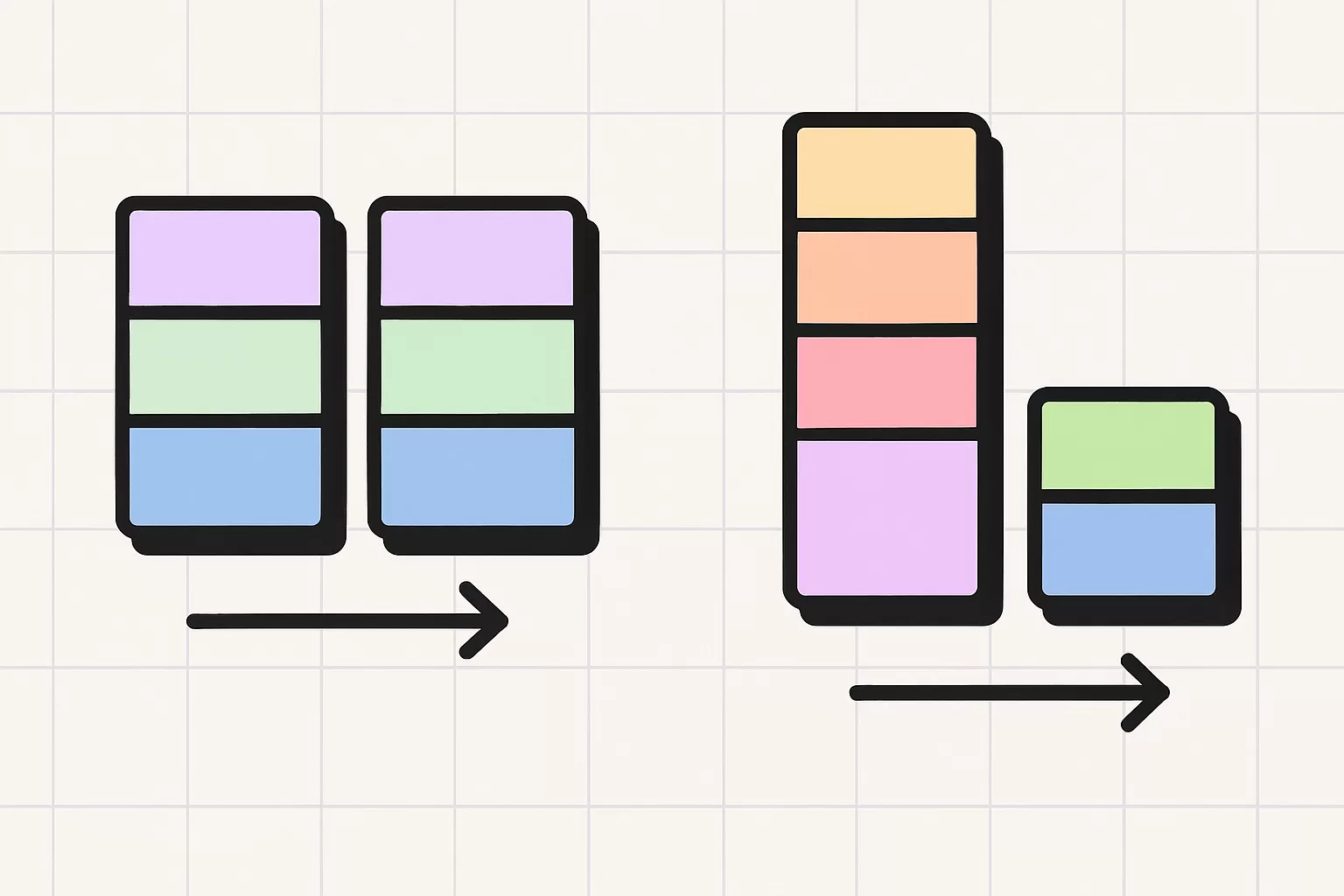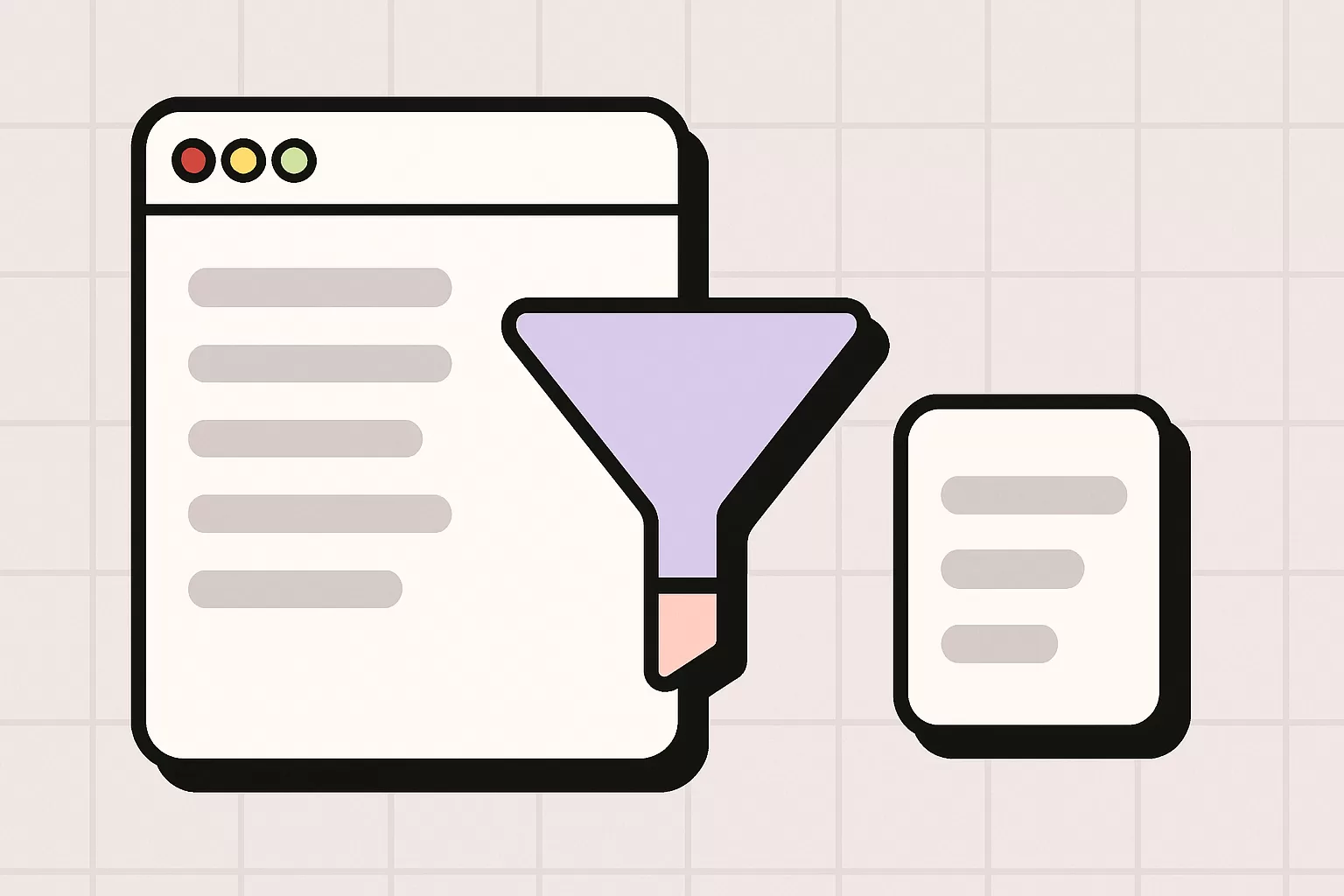
Summarizing means choosing the ideas your reader needs and expressing them briefly. You can use the examples below to decide what to keep, what to leave out, and how to preserve the source's meaning.
What does summarize mean?
To summarize is to give a shorter account of the main ideas, not every detail. Purdue OWL defines the activity as putting the main ideas into your own words and including only the main points.
I'd start by asking what someone must understand after reading your version. Mark that idea in the source before you shorten anything.
Summarise or summarize: What is the meaning?
The meaning of summarize centers on selecting and condensing. Summarize is the verb, summary is the resulting account, and summarizing is the activity. You aren't simply making every sentence shorter; you're deciding which ideas belong in the shorter version.
Summarise and summarize have the same meaning. Summarize is standard in US English. Summarise is common in British English, where summarize is also accepted. Use the spelling that fits your draft's English variety.
What does “summarize” mean in reading? It means identifying the main ideas and essential support. What does “summarize” mean in writing? It means presenting those ideas concisely. After reading a passage, jot down its central point before drafting your summary.
How a summary differs from a paraphrase and an abstract
A summary selects main ideas. A paraphrase restates a particular passage with more of its detail. Purdue OWL describes paraphrases as usually shorter than the passage, while summaries are significantly shorter and take a broad view.
UNC's Writing Center describes an abstract as a self-contained statement about a larger work. Its contents depend on the discipline: scientific abstracts can include purpose and results; humanities abstracts can include thesis, background, and conclusion. An abstract can function as a summary, so the categories overlap.
Choose a summary when you need the main argument, or a paraphrase when the passage's detail matters. For passage-level rewording, Blurwrite's paraphrasing tool can rephrase a sentence and show each changed word.
Choose the form that fits your task
| Form | Purpose | Scope | Typical length |
|---|---|---|---|
| Summary | Give main ideas | Broad view | Much shorter |
| Paraphrase | Restate a passage | More passage detail | Similar or slightly shorter |
| Abstract | Preview scholarly work | Work's key components | Short, self-contained |
Summarizer
The result appears here once you run the tool.
Three examples of summarizing a text, a story, and an email
Informational text
Before: “The library offers a quiet room for individual study. Group discussions sometimes make the main floor noisy. Students who need fewer distractions can use the quiet room, although seats aren't always available.”
After: The library's quiet room offers fewer distractions for individual study, but seats aren't always available.
This keeps the main benefit and its limit. In your version, retain any qualification that changes the claim.
Story or plot
Before: “A traveler loses her map while crossing a forest. She follows a stream, hoping it will lead to a village. After reaching a bridge, she spots houses and finds somewhere to stay.”
After: “After losing her map in a forest, a traveler follows a stream to a village and finds shelter.”
What does “summarize the plot” mean, and what does it mean to summarize a story? Retell the central character's conflict and outcome. Here, the bridge can go; the lost map and shelter stay.
Before: “Please review the attached proposal by Friday. Focus on whether the schedule is workable. We discussed the budget yesterday, so there's no need to review it again. Reply with any schedule changes before I send the proposal to the committee.”
After: “Review the attached proposal's schedule by Friday and reply with changes before it's sent to the committee.”
What does “summarize this email” mean? Keep the request, deadline, and next action. Check your shortened version still tells the recipient what to do.
How to summarize in one sentence
A single sentence is a useful practice exercise, not a requirement for every summary. Use this pattern: “The source explains [main point], supported by [essential information].” Adapt the wording to fit the source.
For a starting draft, Blurwrite's summarizer offers key sentences, a paragraph, or bullet points in Short, Medium, or Long versions. Choose a format, then compare it with the source for accurate main points and an appropriate length.
- Read the whole source: Note its key ideas before selecting details.
- Identify the main point: State what the source chiefly says.
- Choose essential support: Keep information needed to understand that point.
- Write in your own words: Combine the selected ideas into one sentence.
- Compare with the original: Check meaning, qualifications, and missing essentials.
Common mistakes when summarizing
Copying sentences doesn't practice restating ideas in your own words. Keeping every minor detail also hides the central point. Put the source aside briefly, draft from your notes, then reopen it to check your wording.
Watch for added opinions and changed certainty. If the source says an approach sometimes helps, don't rewrite that as always works. Check that every claim in your summary comes from the original.
Academic summaries still need attribution or citation. Purdue OWL explicitly requires credit for summarized ideas. Identify the source in your draft and add the citation your assignment requires.
Related terms: Gist, synopsis, and précis
The gist is the central idea. A synopsis is a concise overview, often of a story or other work. A précis is a concise account of a text's essential points.
These terms are related to summary, but instructions can call for different forms. If your assignment requests a synopsis or précis, check its requirements before choosing what to include.
Keep working on your own text
Free plan
0 USD
Check your text without a card. The same daily allowance applies here and on the tools.
SummarizeTop-up credits
Add words for rewriting when you need them.
- 25,000 words7.49 USD
- 50,000 words13.49 USD
- 100,000 words24.99 USD
Questions about this article
What does summarising mean?
Summarising means giving a brief account of the main points in your own words. For example, a passage describing a canceled outdoor event, heavy rain, and refund instructions could become: The outdoor event was canceled because of heavy rain, and ticket holders should request refunds. Keep the reason and action; omit incidental details.
What does summarise mean?
Summarise means to give a brief account of the main points. It has the same meaning as summarize. Summarise is common in British English, while summarize is standard in American English and is also accepted in British English. For your draft, choose the spelling that matches the English variety you're using.
How do you summarize?
Read the whole source, identify its main point, and restate that point with only essential supporting information. Purdue OWL recommends reading the entire text and noting its key ideas before writing. Compare your version with the original afterward, checking that you've kept the meaning and left out your own opinions.
What does it mean to summarize a text?
It means to explain a text's main ideas in fewer words, normally using your own wording. You select what a reader needs to understand the source rather than repeat every sentence. For an academic text, keep the central claim and any qualification that changes it, then attribute the ideas to their source.
What does the word summarize mean?
Summarize means to give a shorter account of the main ideas or points. It's a verb: you summarize a passage, and the result is a summary. The meaning stays consistent across reading notes, stories, reports, and emails, although the information you need to retain changes with the task.
What does it mean to summarize something?
It means to tell someone the essential information without giving the full account. You can summarize something you've read, heard, or seen, as UNC's Writing Center explains. Start by deciding what someone needs to understand, then remove details that don't change that understanding. Preserve the original message rather than add an interpretation.